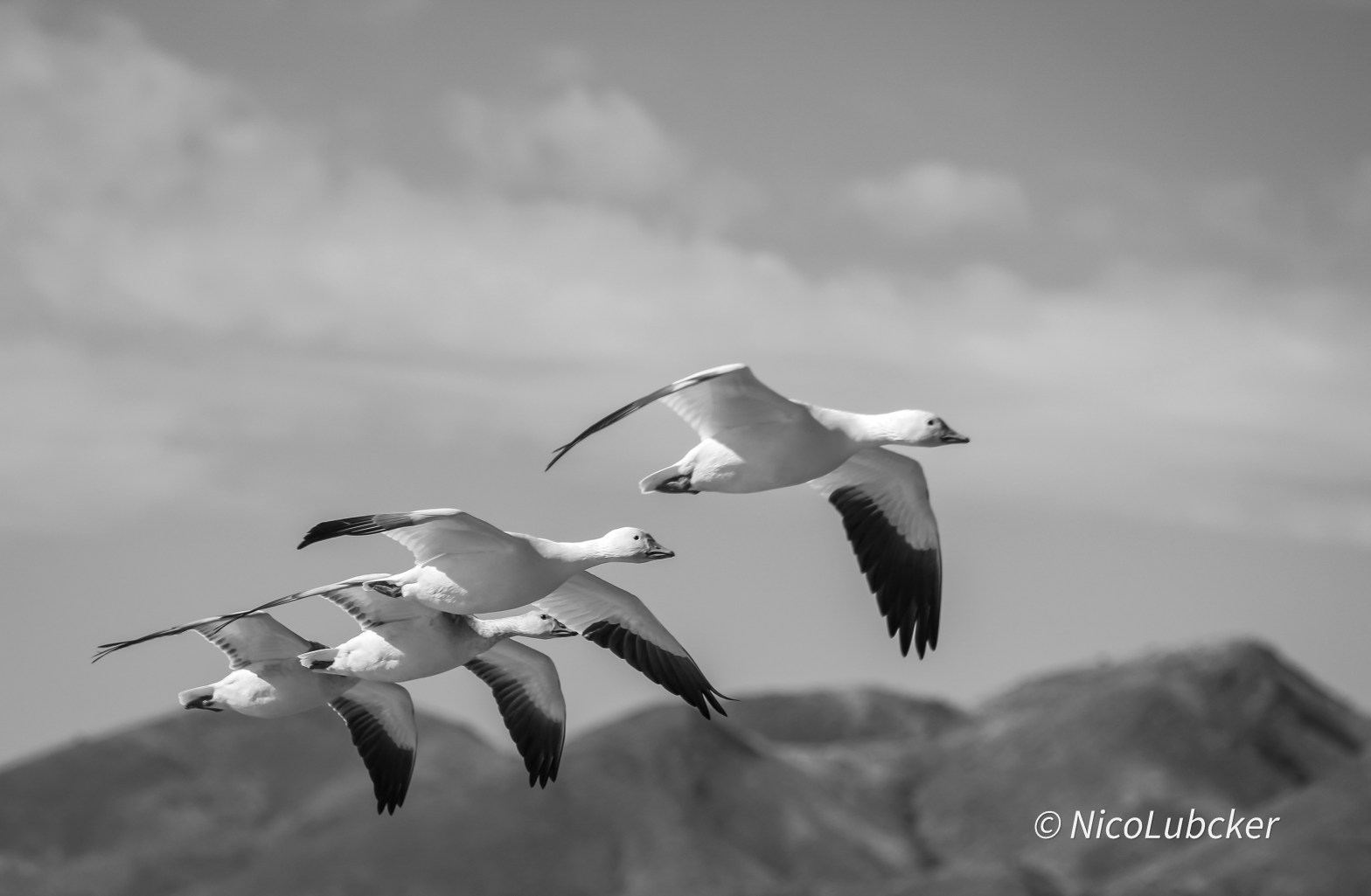
Have you ever wondered if the nutrients used for reproduction in migratory species come from distant winter foraging grounds or local resources obtained prior to breeding?
This seemingly basic question could determine where we should be focusing management efforts.
In our study, we focused on migrating bird species breeding in northern Alaska to investigate the allocation of nutrients for reproduction. We developed a new method using stable isotope analysis of individual amino acids in muscle tissue and egg yolk to determine the reliance on income (obtained at the breeding site) versus capital (stored from previous feeding) breeding strategies.
Our findings revealed that the studied bird species utilized a combination of income and capital breeding strategies. However, the analysis of stable isotope data of amino acids provided intriguing insights. We discovered that a larger proportion of the resources for egg production originated from the birds’ own stores rather than the resources acquired during the breeding period. This more detailed approach to understanding nutrient allocation surpasses the traditional bulk tissue stable isotope analysis method.
The implications of our research for conservation efforts are significant. By discerning whether nutrients for reproduction are obtained at the wintering or breeding grounds, conservationists can strategically focus their efforts on protecting specific locations crucial for sustaining the populations of these migratory species. Our method is not limited to the bird species studied but can be applied to a wide range of taxonomic groups, as long as there is a substantial isotopic difference between resources obtained during the breeding and non-breeding periods.
In conclusion, our study provides a tool to quantify the balance between income and capital breeding strategies in migratory species. This tool can be utilized to gain valuable insights for conservation efforts, aiding in the selection of habitats to conserve and ensuring the preservation of these magnificent species for future generations.
Please see paper Open Access in @MethodsEcolEvol, @AnimalEcoPhys.
 Nico Lübcker, Ph.D