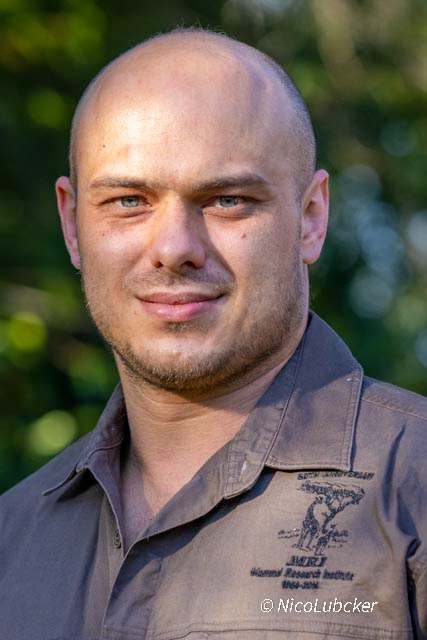
My research investigates the nexus between organismal physiology and ecology that enables species to persist in increasingly stochastic environments.
My research addresses both basic and applied questions on three broad, interconnected themes that complement existing research in your department: 1) tracing energy flow at various levels of biological organization and among a diverse array of taxa; 2) quantifying pollutant loads relative to the physiology and trophic ecology of consumers; and 3) use of endocrinology and isotopes to study reproduction, stress, metabolism, and water balance at the individual level.
Please see my research and publications pages for details.
I completed my undergraduate, honors, M.S., and Ph.D. degrees in the Department of Zoology & Entomology at the University of Pretoria (UP) in South Africa (SA). I gained extensive field and laboratory experience through collaborations with various institutions, conducting research on a variety of taxa. My early career work focused on aquatic ecology. My training expanded into marine ecosystems after spending 13 months on Marion Island. I developed biochemical biomarkers during my Ph.D. assess how the physiology or organism respond to environmental changes. This endeavor combines compound-specific isotope analysis with demographic, telemetry, pollutant and steroid data. I work on reptiles, turtles, birds, and marine mammals with international collaborators. I have also expanded my research to desert ecosystems by co-leading a monthly small mammal trapping program at the Sevilleta Long-Term Ecological Research (SEV-LTER) site in central New Mexico and am collecting blood samples from a guild of reptiles across habitats in the American Southwest, conducted in collaboration with the Museum of Southwestern Biology.
As a scientist, educator, and mentor, I pledge to expand diversity, equity, and inclusion of previously underrepresented racial and ethnic groups. I am dedicated to mentoring and teaching the next generation of biologists based on experiential learning; student mentoring is one of the primary reasons why a career in academia appeals to me. The goal is to inspire the next generation of critical thinkers, foster independence, and stimulate creativity.
 Nico Lübcker, Ph.D